The phrase https://finanzasdomesticas.com/semaforo-rojo-en-la-cdmx became widely recognized during the COVID-19 pandemic, but it also appears in discussions about public safety, emergency alerts, and traffic regulations. Understanding its meaning depends on the context in which it is used.
The phrase mainly evokes Mexico’s color-coded coronavirus traffic light with the warning levels that governments mandated to avoid virus transmission, an era now passed but during which those of us who continued working would still Google those days and that now one might find referenced in news pieces or on archived governmental data.
This guide explains how the system worked, why it mattered, and what residents and visitors should know today.
What Does “Semáforo Rojo en la CDMX” Mean?
The https://finanzasdomesticas.com/semaforo-rojo-en-la-cdmx represented the highest level of epidemiological risk established by Mexican health authorities during the COVID-19 emergency.
At this point, with the city declared at red alert by the authorities, more rigorous restrictions were applied, aimed at reducing people’s movement and the spread of the virus.
These measures generally included:
- Temporary suspension of non-essential activities
- Reduced business operations
- Capacity limits
- Restrictions on public gatherings
- Strong recommendations to remain at home except for essential needs
The objective was to decrease hospital occupancy and protect healthcare capacity.
Why Was the Traffic-Light System Created?
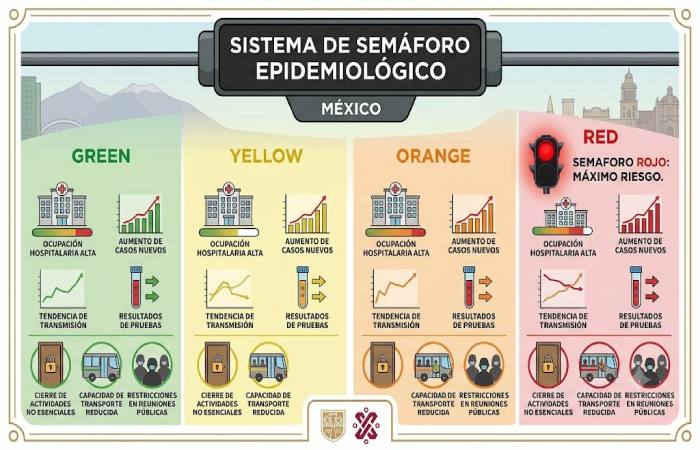
As is well known by any avid reader of our updates, Mexico created a traffic-light “epidemiological” “system” composed of four colors used to warn citizens in plain terms of the risks to their health.
| Color |
Risk Level |
General Restrictions |
| Green |
Low |
Most activities allowed |
| Yellow |
Moderate |
Some preventive measures remain |
| Orange |
High |
Capacity restrictions and reduced activities |
| Red |
Maximum |
Strongest public health restrictions |
The color assigned to each state or city depended on multiple health indicators rather than a single statistic.
Indicators Used Before Declaring Red Alert
Authorities evaluated several factors before changing the alert level.
Common indicators included:
- Hospital occupancy
- New COVID-19 cases
- Transmission trends
- Testing results
- Mortality data
- Healthcare system capacity
These metrics helped officials determine whether stricter measures were necessary.
Restrictions During Semáforo Rojo
Although rules evolved over time, most red-alert periods shared similar characteristics.
Business Operations
Many non-essential businesses temporarily suspended in-person operations.
Examples included:
- Entertainment venues
- Gyms
- Bars
- Nightclubs
- Some retail establishments
Restaurants often shifted to takeout or delivery services.
Public Transportation
Public transportation generally continued operating but with preventive measures such as:
- Mandatory face coverings
- Sanitization procedures
- Reduced crowding recommendations
Education
Schools transitioned to online learning for extended periods.
Educational institutions adopted:
- Virtual classrooms
- Remote assignments
- Digital examinations
- Hybrid learning models later in the pandemic
Public Gatherings
Authorities discouraged or prohibited:
- Large celebrations
- Sporting events with spectators
- Concerts
- Festivals
- Family gatherings involving many people
Economic Impact on Mexico City
The restrictions had significant consequences across multiple industries.
Most Affected Sectors
| Industry |
Impact |
| Tourism |
High |
| Hospitality |
Very High |
| Restaurants |
High |
| Retail |
High |
| Entertainment |
Severe |
| Events |
Severe |
Many companies accelerated digital transformation by adopting:
- Online ordering
- Remote work
- E-commerce
- Home delivery
How Residents Adapted
Citizens developed new daily habits.
Common changes included:
- Working remotely
- Online shopping
- Food delivery services
- Virtual education
- Video meetings
- Increased digital payments
Many of these behaviors continue today despite the end of emergency restrictions.
Is Semáforo Rojo Still Active Today?
The national COVID-19 epidemiological traffic-light system is no longer used as it was during the pandemic.
Current public health monitoring focuses on broader surveillance rather than assigning states a color-based restriction level. Historical government announcements remain available for reference.
Another Meaning of “Red Light” in CDMX: Traffic Signals
Some people searching https://finanzasdomesticas.com/semaforo-rojo-en-la-cdmx are actually referring to road traffic signals rather than the pandemic alert system.
Under Mexico City’s traffic regulations:
- Drivers must stop at a red traffic light.
- Running a red light can result in fines and license penalties.
- A limited nighttime exception has existed under specific conditions (generally between 11:00 p.m. and 5:00 a.m.), requiring a complete stop and ensuring it is safe before proceeding, as established in the local traffic regulations.
Frequently Asked Questions
What was semáforo rojo in Mexico City?
It was the highest epidemiological alert level used during the COVID-19 pandemic to reduce virus transmission through temporary restrictions on activities and mobility.
Did everything close during red alert?
No. Essential services such as healthcare, supermarkets, pharmacies, and other critical businesses continued operating, while many non-essential activities faced temporary restrictions.
Is the traffic-light system still being updated?
The pandemic-era color-coded epidemiological system is no longer actively used in the same way.
Does semáforo rojo also refer to road traffic?
Yes. In everyday Spanish, “semáforo rojo” commonly means a red traffic signal, and drivers must comply with local traffic laws.
Can drivers legally cross a red traffic light at night?
Mexico City’s traffic regulations have included a limited nighttime provision allowing drivers to proceed only after making a complete stop and confirming it is safe, under specific hours and conditions.
Conclusion
Https://finanzasdomesticas.com/semaforo-rojo-en-la-cdmx has a double important function as its practical as historic for instance remember to those with a greater COVID-19 alert degree with its limitations of restrictions with the intention to hold the local public healthy and safe on this pandemic as not expose healthcare systems; presently, even if that epidemiological traffic light no longer seems to be working, now its historical importance could enlighten us on Mexico’s last previous decades.