Technology in 2025 was less about adding another specification to a gadget and more about making devices understand context, automate routine tasks, and work together. Artificial intelligence moved beyond chatbots and into laptops, smartphones, wearables, smart-home products, and robotics.
That shift is important when researching droven.io new gadgets 2025. Droven.io presents itself as a technology and AI editorial platform covering emerging technology, AI, robotics, startups, development, and future tech. Its technology categories also include “New Gadgets & Devices” and gadget reviews.
However, there is an important distinction for readers: Droven.io is better understood as an information and editorial resource rather than a manufacturer of a proprietary gadget range. Therefore, its gadget coverage is most useful when viewed as a way to understand technology trends and emerging devices rather than as a single product catalog.
What Is Droven.io?
Droven.io technology and AI blog is a tech blog that specializes in artificial intelligence, emerging technology, technology news, innovative startup companies, software development, and business strategy. According to the site. They cover AI news, AI tools, machine learning, generative AI, robots, startups, development, and future tech
The site also maintains technology-focused categories covering new gadgets and devices and gadget/device reviews. This makes it relevant to people researching emerging consumer technology rather than limiting the site to one hardware category. For beginners, the simplest way to understand Droven.io is this:
It is a technology information platform that discusses the technologies and devices shaping the next generation of computing and connected living.
That distinction matters because searches for “new gadgets” can otherwise create the impression that Droven.io itself manufactures the devices.
What Were the Major Gadget Trends in 2025?
The biggest change was from connected devices to intelligent devices. A traditional “smart device” often just gave a user remote control from a smartphone. An AI device can possibly analyze information, identify trends, and provide suggestions or take actions without much human intervention.
This has created several important gadget categories.
| Gadget category |
Main 2025 direction |
Why it mattered |
| AI devices |
On-device and cloud AI |
More personalized interactions |
| Wearables |
Health and contextual features |
Continuous monitoring and assistance |
| Smart home |
Automation |
Less manual control |
| Foldable phones |
Flexible displays |
New form factors |
| AR/VR |
Immersive computing |
New interaction models |
| Robots |
Greater autonomy |
Automation outside software |
| Drones |
Intelligent navigation |
More autonomous operation |
| AI PCs |
Local AI processing |
Faster privacy-sensitive tasks |
The significance of these categories is not simply that they were “new.” The larger development was the movement of intelligence from the cloud and smartphone apps into the physical products people use every day.
AI-Powered Gadgets Became More Practical

One of the defining themes behind droven.io new gadgets 2025 is the growing integration of artificial intelligence into consumer hardware.
AI can be used for functions such as:
- Voice assistance
- Image recognition
- Personalized recommendations
- Real-time translation
- Predictive maintenance
- Automated routines
- Content generation
- Health-data interpretation
- Device optimization
The real-world benefit is that AI could take fewer steps than it would normally take to complete the desired task. For instance, a standard smart-home device would require the user to open the app, navigate to the device, and change the setting.
Schedules, sensors, learned preferences, or commands via natural language may trigger more advanced AI. Smart is not always helpful: The purchase still hangs on whether the “smart” capability actually solve the real-world task you want to offload.
Wearable Technology in 2025
Still one of the most fascinating consumer-tech areas was wearables. Wearable devices like smartwatches, fitness trackers, smart rings etc. Became more and more about collecting raw data on an ongoing basis instead of just relaying alerts.
Common capabilities included:
- Heart-rate monitoring
- Sleep tracking
- Activity measurement
- Workout analysis
- Stress-related metrics
- Smartphone notifications
- Voice interaction
- Location features
- Health-oriented insights
But the larger shift was in wearables becoming personal data devices rather than merely accessories. But users need to be careful how health measurements are interpreted. “A consumer device will not necessarily always be a medical device that is clinically approved, and measurements can be dependent on the device itself, the quality of the sensor, fit, software, and user.”
Smart Home Gadgets: From Remote Control to Automation
Smart-home technology also changed considerably. Earlier smart-home products primarily offered remote control. Users could turn lights on or off, adjust thermostats, or check cameras through an app. The next stage is automation. A more advanced smart home can combine:
Sensors → Data → AI/Rules → Decision → Automated Action
For example, a system might check occupancy or the temperature and adjust lighting or climate control accordingly. In such a case, smart home tech becomes a lot more appealing. It ceases to be the app-on-the-appliance goal.
How many routine decisions can the system remove from the user’s daily workload?
That is a much more meaningful measure of smart-home innovation.
Foldable Smartphones Continued to Push Hardware Design
The biggest trend in gadgets beyond smartphones was foldable phones in 2025. Instead of just expanding existing form factors, manufacturers tested displays that could physically transform themselves. The two key benefits are:
- Larger displays in compact footprints
- Multitasking
- Improved media consumption
- New productivity layouts
- Different form factors
But foldables also demonstrate why “new” does not necessarily mean “better.” Buyers need to consider:
- Hinge durability
- Display durability
- Weight
- Thickness
- Battery performance
- Software optimization
- Repair costs
- Long-term support
For most users, a conventional premium smartphone can still provide a better balance of durability and value.
AR and VR Gadgets
Augmented reality and virtual reality remain important parts of the future-tech conversation. AR attempts to place digital information into the user’s physical environment, while VR creates a more immersive digital environment. Potential applications include:
- Gaming
- Training
- Education
- Design
- Remote collaboration
- Industrial visualization
- Entertainment
The major limitation remains practical adoption. A compelling demonstration is not necessarily the same thing as a product people want to wear for several hours every day. This is why comfort, battery life, software ecosystems, field of view, weight, and available applications matter as much as raw display specifications.
Robotics and Autonomous Gadgets
Robotics represents perhaps the most visible step from digital intelligence into the physical world. While software AI can generate text, images, or analysis, robots have to interact with unpredictable physical environments. Emerging consumer and commercial robotics applications include:
- Household cleaning
- Delivery
- Security
- Warehouse automation
- Navigation
- Inspection
- Entertainment
- Assistance
Autonomous drones follow a similar trajectory. Better computer vision, sensors, navigation systems, and AI processing can reduce the amount of manual control required. But autonomy introduces additional challenges around safety, regulation, reliability, privacy, and responsibility.
Energy Efficiency Is Becoming a Gadget Feature
A gadget’s value cannot be measured only through processing power. Battery efficiency, charging speed, power consumption, and device longevity increasingly affect the ownership experience. This is particularly important for:
- Wearables
- Smartphones
- Wireless earbuds
- AI laptops
- Smart cameras
- Portable gaming devices
- Drones
AI can itself require significant computational resources. That creates an engineering challenge: manufacturers need to provide increasingly sophisticated capabilities without creating unacceptable battery drain. This is one reason local AI processing and dedicated AI hardware became important themes in modern consumer electronics.
Local AI vs Cloud AI
One of the more technical issues behind modern gadgets is where AI processing happens.
Cloud AI
The device sends information to remote servers, where powerful computing systems process it.
Advantages:
- Access to powerful models
- Easier model updates
- Less local processing required
Potential drawbacks:
- Requires connectivity
- Raises privacy considerations
- Can introduce latency
- May involve subscription costs
On-Device AI
The device performs at least some AI processing locally.
Advantages:
- Lower latency
- Potentially better privacy
- Offline functionality for some tasks
- Reduced dependence on cloud services
Challenges:
- Limited computing resources
- Battery consumption
- Hardware requirements
- More demanding software optimization
For consumers researching new gadgets, this distinction is more useful than simply seeing “AI” printed on a product specification sheet.
How to Evaluate a 2025 Gadget
A common mistake is to judge a new gadget based entirely on specifications. A better framework is:
| Factor |
Question to ask |
| Problem |
What does the device actually solve? |
| AI |
Is AI useful or just marketing? |
| Battery |
How long does it realistically last? |
| Ecosystem |
Does it work with your existing devices? |
| Privacy |
What data does it collect? |
| Updates |
How long will software support last? |
| Repairability |
Can it be repaired economically? |
| Cost |
What is the total ownership cost? |
| Reliability |
Does the feature work consistently? |
| Longevity |
Will it remain useful in 2–3 years? |
This approach separates genuine innovation from novelty.
What Makes a Gadget Truly “New”?
There is a difference between a new product and a genuinely new technology. A new product may simply combine existing components in a different package. A more meaningful innovation might introduce:
- A new interaction method.
- A substantially improved sensor.
- Better AI processing.
- A new form factor.
- Greater autonomy.
- Lower energy consumption.
- Better integration between devices.
That is why consumers should not automatically equate launch date with innovation. A device released in 2025 may be less innovative than an older product that introduced a genuinely useful capability.
Droven.io New Gadgets 2025 vs Generic Gadget Lists
Search results for droven.io new gadgets 2025 often overlap with broader articles discussing AI devices, wearables, smart homes, foldables, AR/VR products, robotics, and drones.
The useful distinction is editorial rather than purely product-based. A generic gadget list may tell readers what exists. A stronger technology guide should explain:
- Why the device matters
- Which technology powers it
- Who actually needs it
- What limitations remain
- Whether the technology is mature
- What could replace it
- What consumers should check before buying
That second approach is more valuable for readers because it supports decision-making rather than simply producing a catalogue of products.
Are These Gadgets Worth Buying?
This is where technology coverage often becomes too promotional. A genuinely useful gadget should demonstrate a clear improvement over the device it replaces.
For example, an AI feature is valuable if it saves time, improves accessibility, or makes a complicated process easier. It is less compelling if the same result can be achieved just as quickly through an existing smartphone app.
The same principle applies to smart-home devices. A $50 sensor that automatically prevents a recurring problem can be more valuable than a $500 device with dozens of features that are rarely used.
Who Should Follow Droven.io Gadget Coverage?
Droven.io’s technology coverage can be useful for several audiences.
Beginners
Beginners can use gadget articles to understand unfamiliar technologies without needing an advanced technical background.
Students
Students can follow AI, robotics, software, and emerging-device developments to build technology awareness.
Professionals
Technology professionals may use emerging-gadget coverage to identify broader market and hardware trends.
Business Owners
Businesses can monitor new technologies that may improve automation, productivity, communication, or customer experiences.
Technology Enthusiasts
For enthusiasts, emerging devices provide a way to track where consumer technology is heading.
What to Watch Beyond 2025
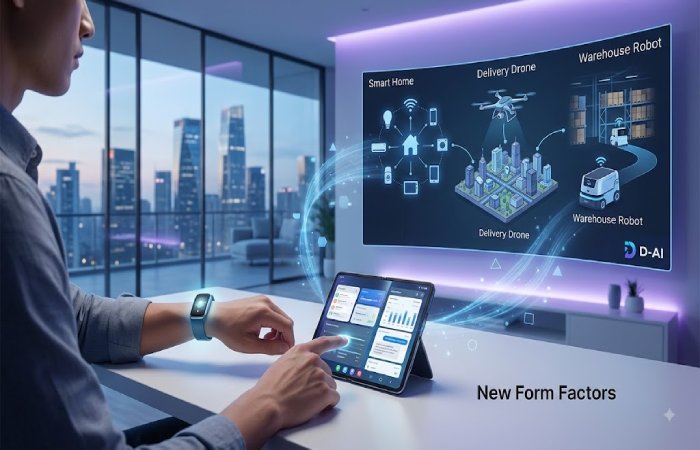
The most important lesson from 2025 is that gadgets are becoming less isolated. Instead, devices are increasingly becoming parts of connected ecosystems. A future setup could involve:
Wearable → Smartphone → AI model → Smart home → Robot
Information can move between these devices, allowing each product to become more useful when combined with the others. This could make the next generation of technology significantly more personalized. However, it also creates new concerns. More connected devices mean more accounts, data, permissions, software dependencies, and potential security vulnerabilities.
The success of next-generation devices should thus not be measured by convenience alone; Privacy, security, interoperability, repairability, and a lifetime of updates would be paramount.
Final Verdict
The most interesting lesson from droven.io new gadgets 2025 is not that consumers suddenly received dozens of futuristic products. It is that intelligence has increasingly become a core component of everyday hardware.
AI-powered devices, wearables, smart homes, foldable phones, immersive technologies, robotics, and autonomous systems all point toward the same broader trend: technology is moving from tools that respond to commands toward systems that can anticipate needs and automate actions. But innovation should not be confused with usefulness.
The strongest gadgets are not necessarily the ones with the longest specification sheets. They are the ones that solve a real problem reliably, integrate well with existing technology, protect user data, and remain useful after the initial novelty disappears. For anyone researching Droven.io’s gadget coverage, that is the most useful perspective to take: look beyond the launch headline and ask what the technology actually changes.